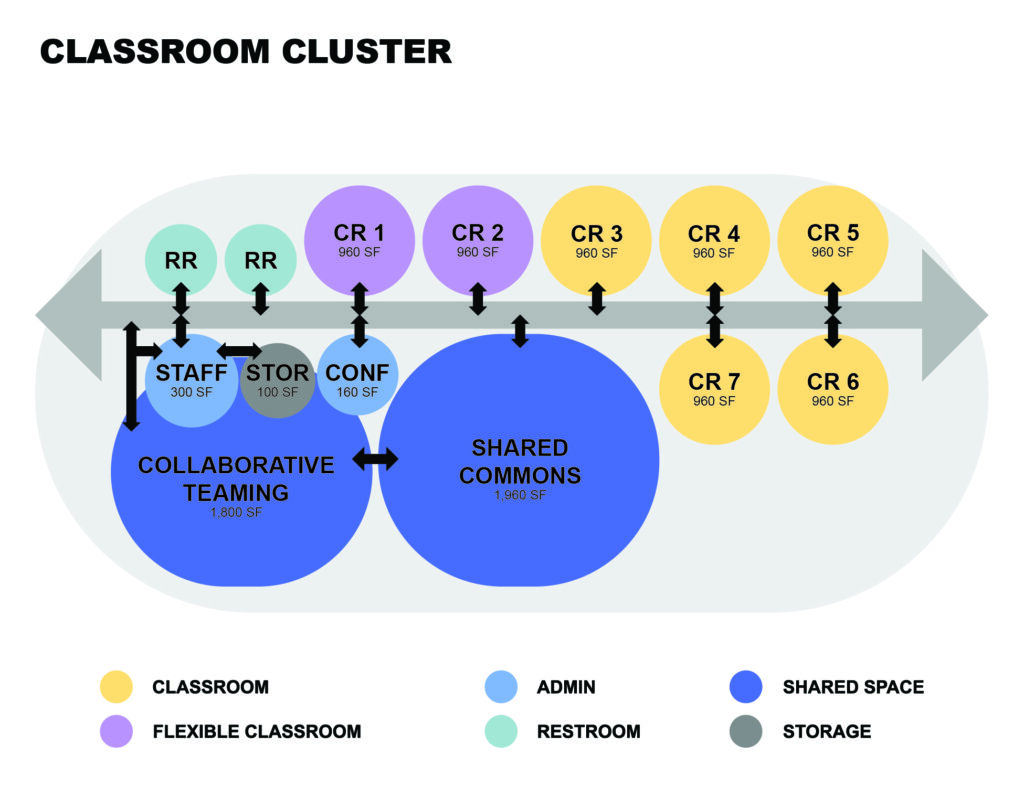
1. Flexible Classrooms (Grades 9–12)
Equipment: Interactive flat panels or projection systems with HDMI and wireless connectivity; mobile teacher station with integrated document camera and USB-C/HDMI docking; classroom field amplification systems; ceiling-mounted Wi-Fi access points; climate and lighting control interfaces. Seamless integration of educational technology including AV tools, digital collaboration stations, and device-charging systems.
Finishes: High-durability, low-VOC paint in neutral and accent tones to support engagement and flexibility; acoustic ceiling panels with sound absorption ratings; resilient flooring (e.g., LVT or carpet tiles) with noise-dampening underlayment; tackable wall surfaces; writable wall sections using glass or whiteboard paint.
Furniture: Modular desks that link or separate easily; Ruckus stackable chairs for active movement; soft seating in reading or reflection corners; mobile tables for co-teaching or tutoring; mobile whiteboards, rolling storage units, and lightweight partitions to define breakout areas. Furniture should accommodate both left- and right-handed users and include inclusive design options for students with physical needs. Include calm-down zones and sensory-aware furniture to support neurodiverse learners. Furniture should be mobile, flexible, including powered options and cable management to support technology integration and reduce visual clutter.
Activities:
- Direct instruction (lectures, demonstrations)
- Collaborative group work
- One-on-one tutoring or teacher conferencing
- Peer-to-peer teaching
- Independent reading or journaling
- Online research or digital assignments
- Presentation and public speaking practice
- Small group discussion circles
- Flexible testing or assessment zones
- Maker-style classroom projects
Design Objectives: Support differentiated instruction strategies including whole-group, small-group, and one-on-one configurations; enable quick transformation between lecture, collaboration, and quiet work modes; foster inclusivity through ergonomic, accessible design. Include calm-down zones and sensory-friendly layouts for all students. Environments should be project-based learning ready, and support student movement and exploration. Ensure inclusive access for all students, including those with disabilities and diverse learning needs, across general and specialized classrooms.
Organization: Room organization shall allow a clear line of sight from all student stations to instructional zones; power and charging access distributed equitably; furniture arranged to promote circulation, flexibility, and instructional adaptability; integrate natural light and views with glare control.