Community Engagement
We held community meetings to ensure the community’s voice helps shape the future of our schools.
These meetings gave us the chance to share clear and honest information about school facilities and potential improvements, while also allowing families, students, staff, and neighbors to tell us what matters most to them.
By working together, we can create a Facilities Master Plan that reflects our community’s priorities and supports our schools for years to come.
Visioning Workshop Summary
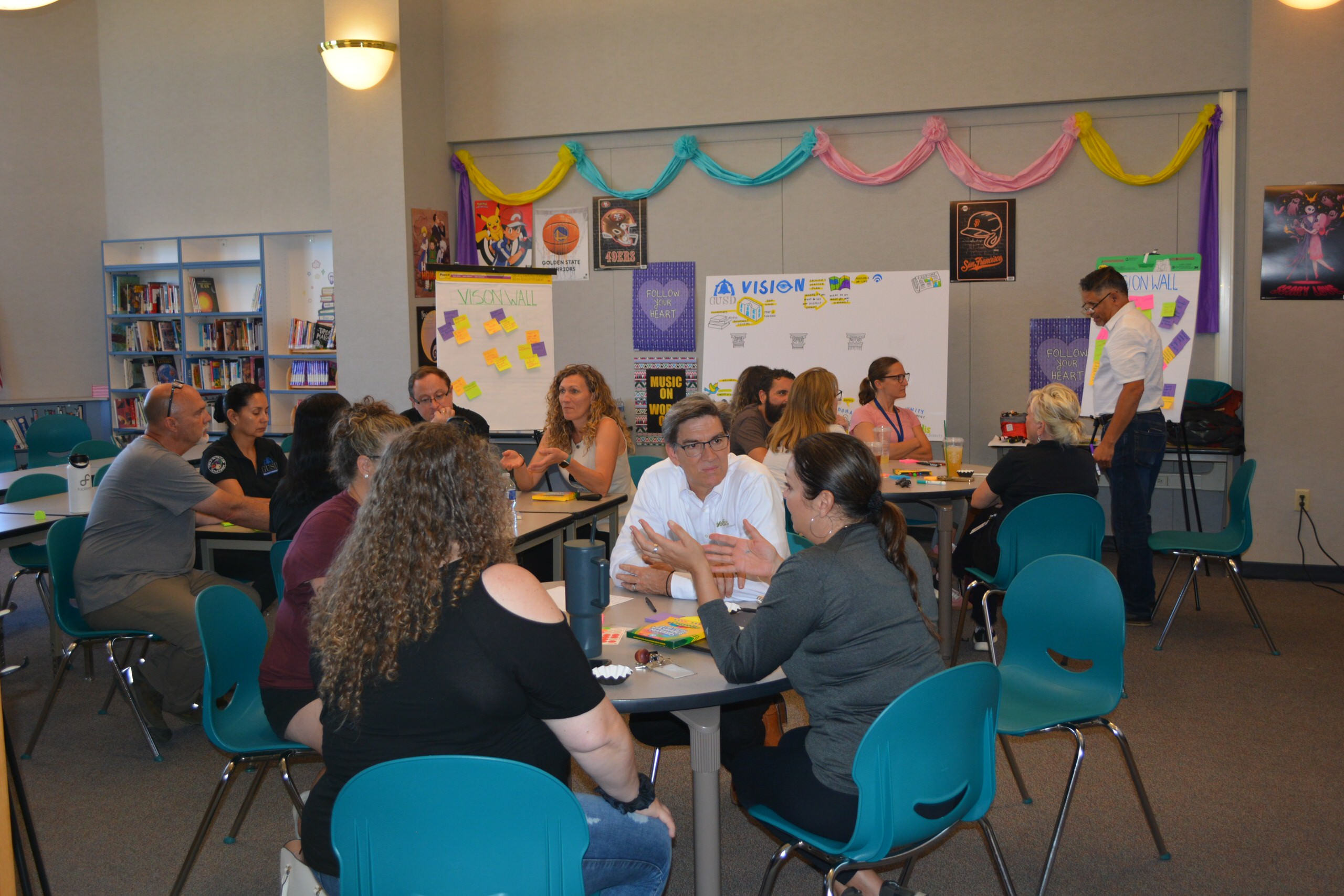
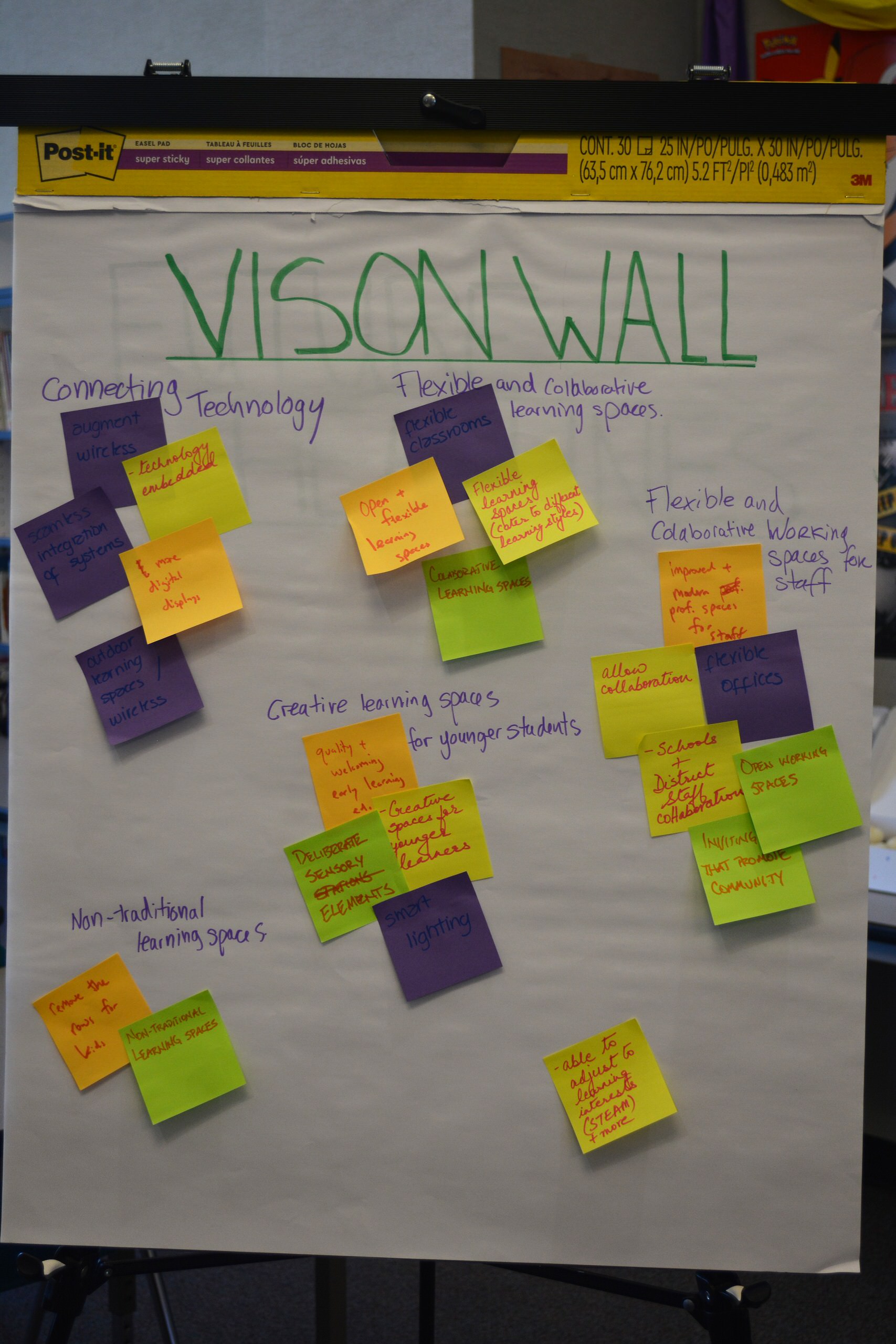
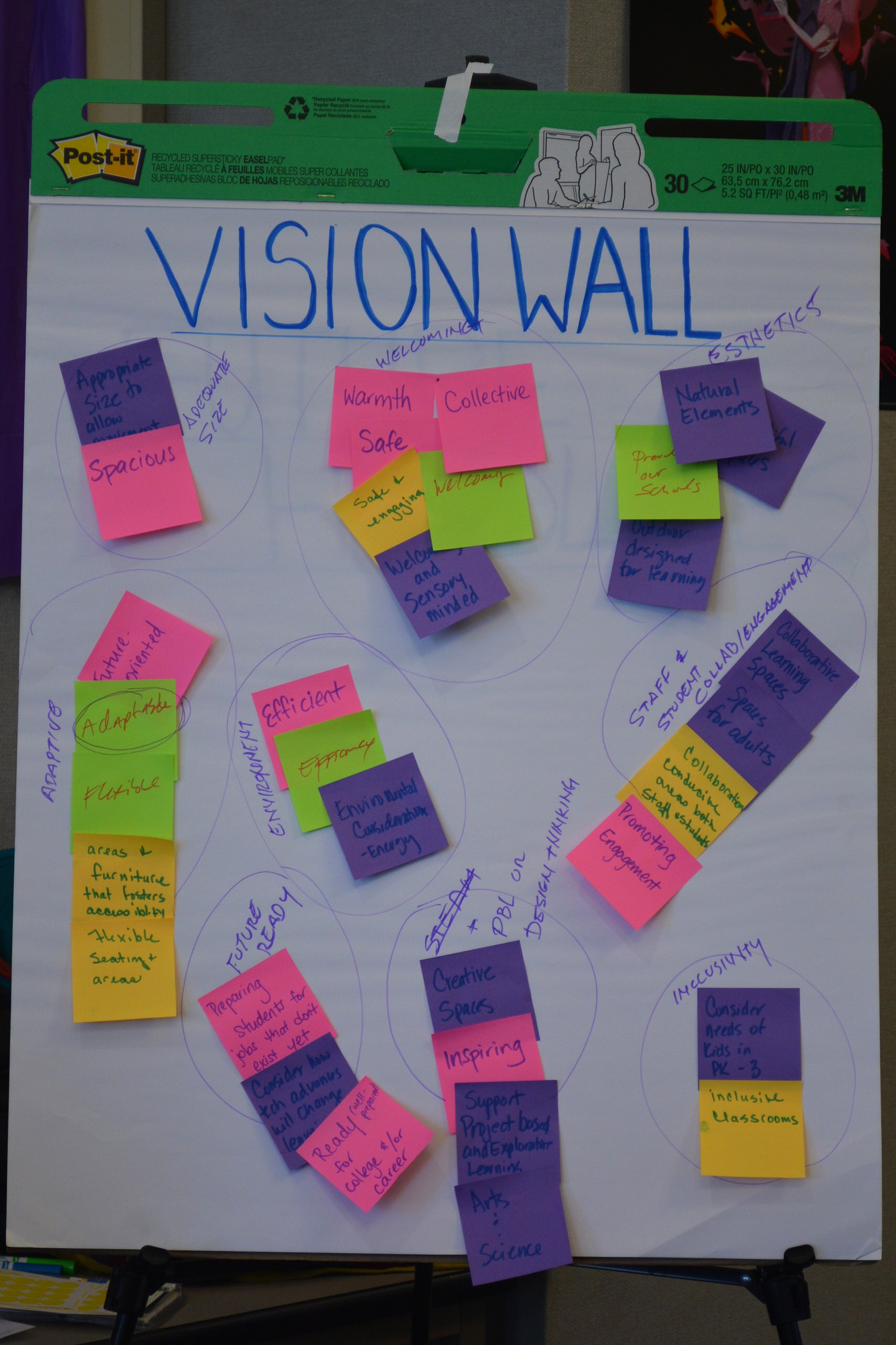
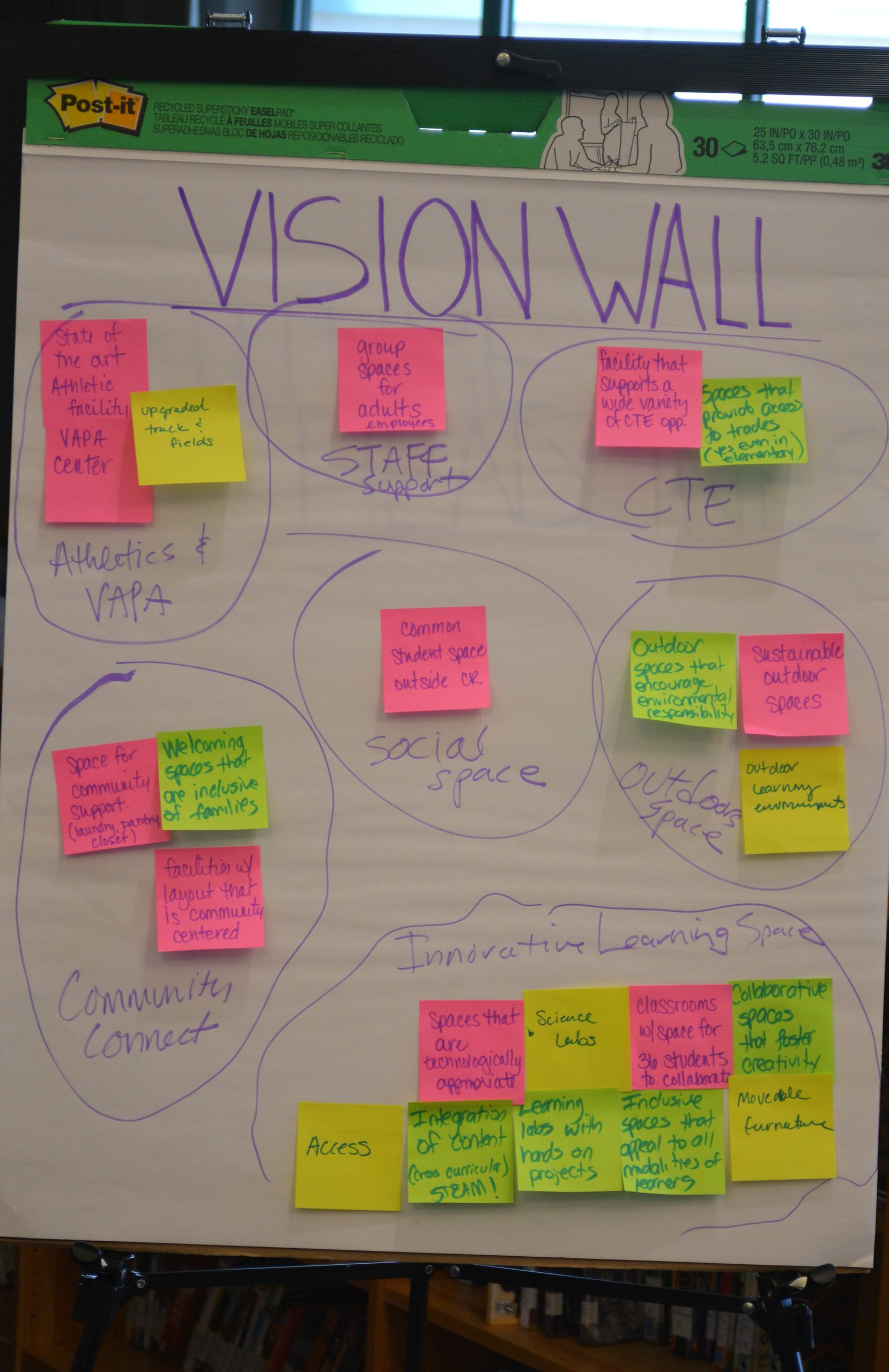
As part of the Facilities Master Plan process, the design team facilitated a Visioning Workshop with District administrators to establish a shared vision for the District’s future. The purpose of this engagement was to align long-term facility planning with the District’s educational goals and priorities, and to inform the development of a comprehensive and responsive Facilities Master Plan.
During the workshop, participants identified key educational and programmatic priorities, established guiding principles for facility planning, and articulated their vision for high-quality, future-ready learning environments. The discussion also considered funding realities and constraints to ensure that the emerging vision remains achievable and fiscally responsible. In addition, the group reflected on the previous Facilities Master Plan to evaluate what strategies remain relevant today and what should evolve to address the District’s needs over the next ten years.
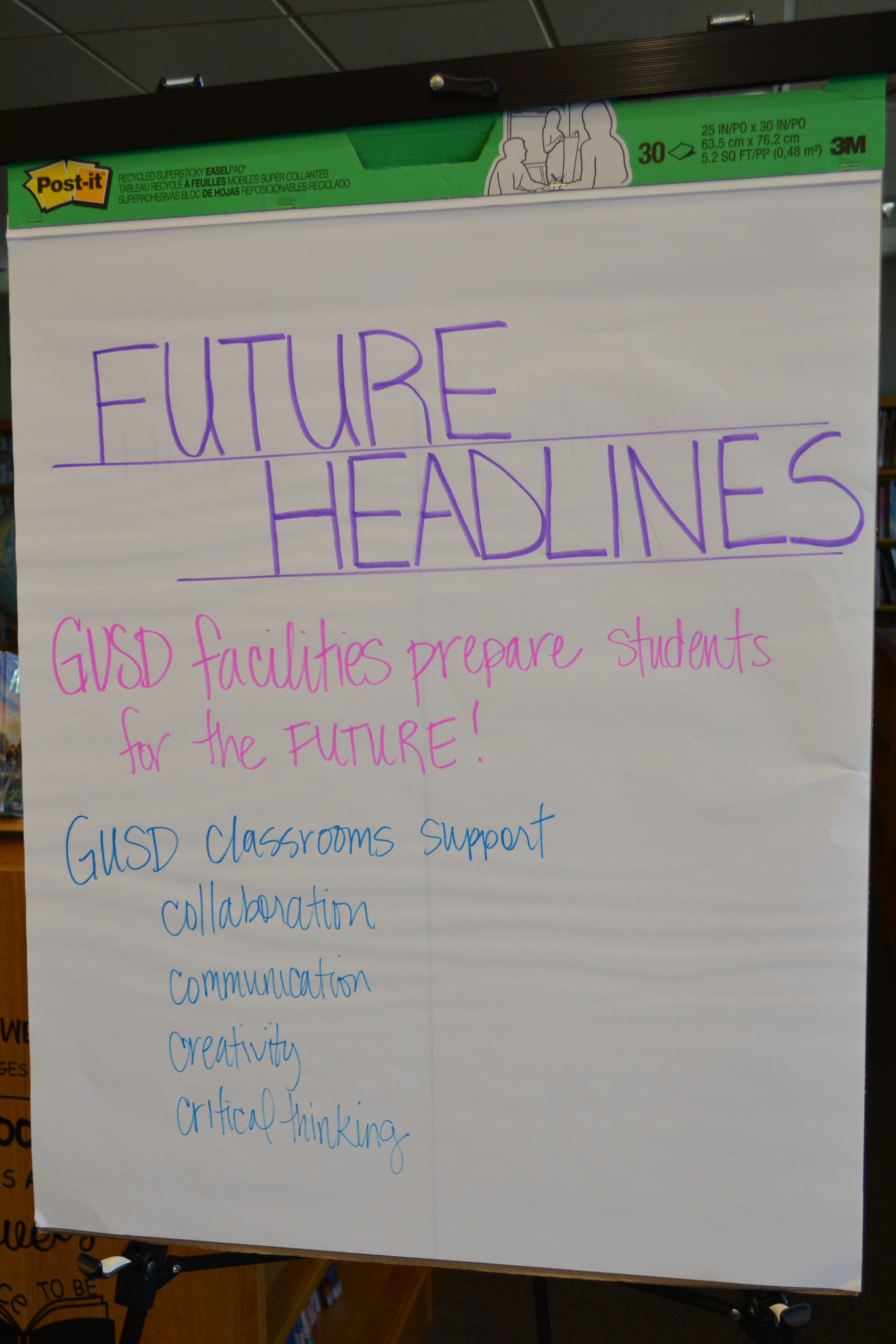
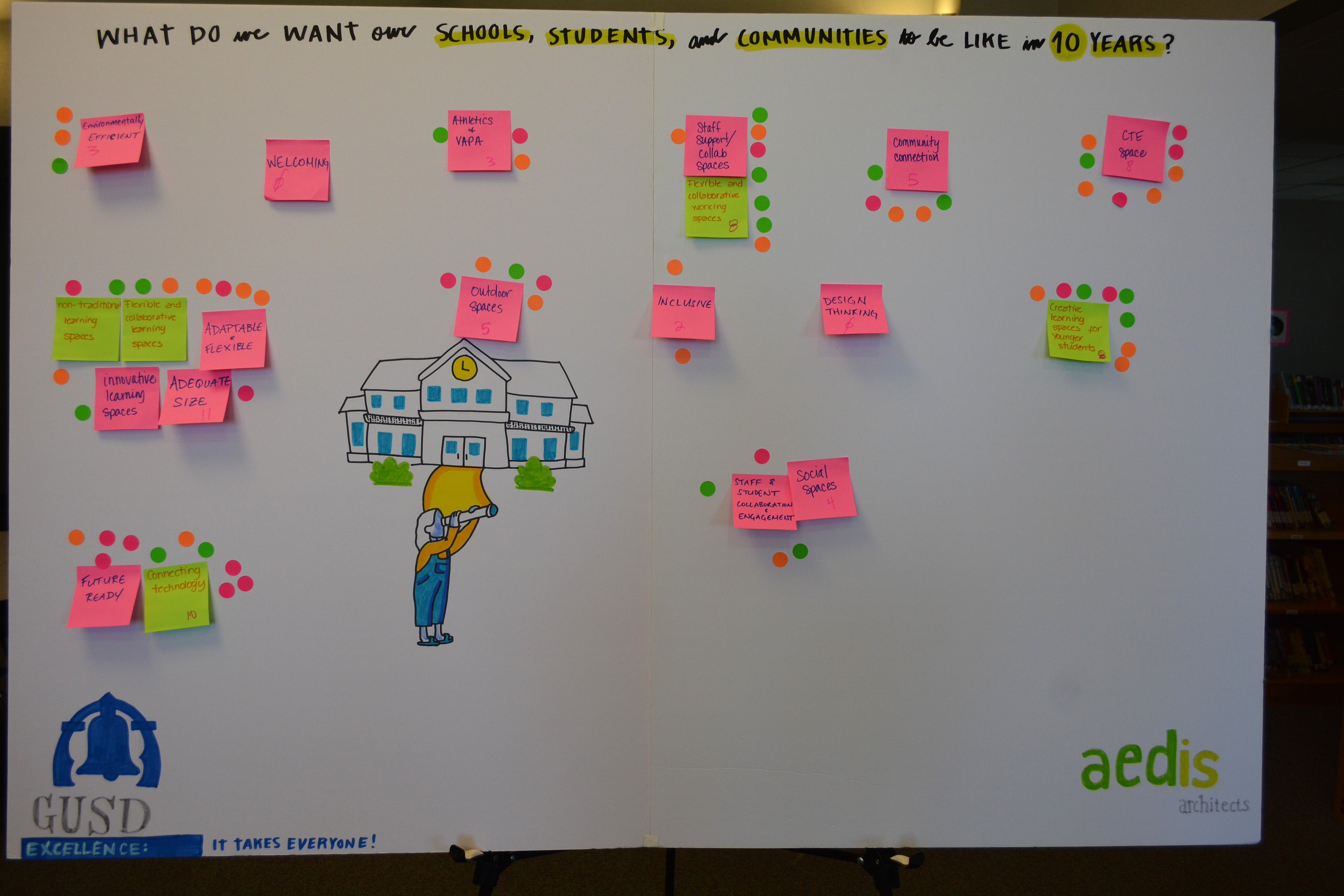
A series of interactive activities encouraged participants to draw from both their professional experience and their aspirations for the District, allowing a collective vision to emerge through dialogue and collaboration.
What We Heard
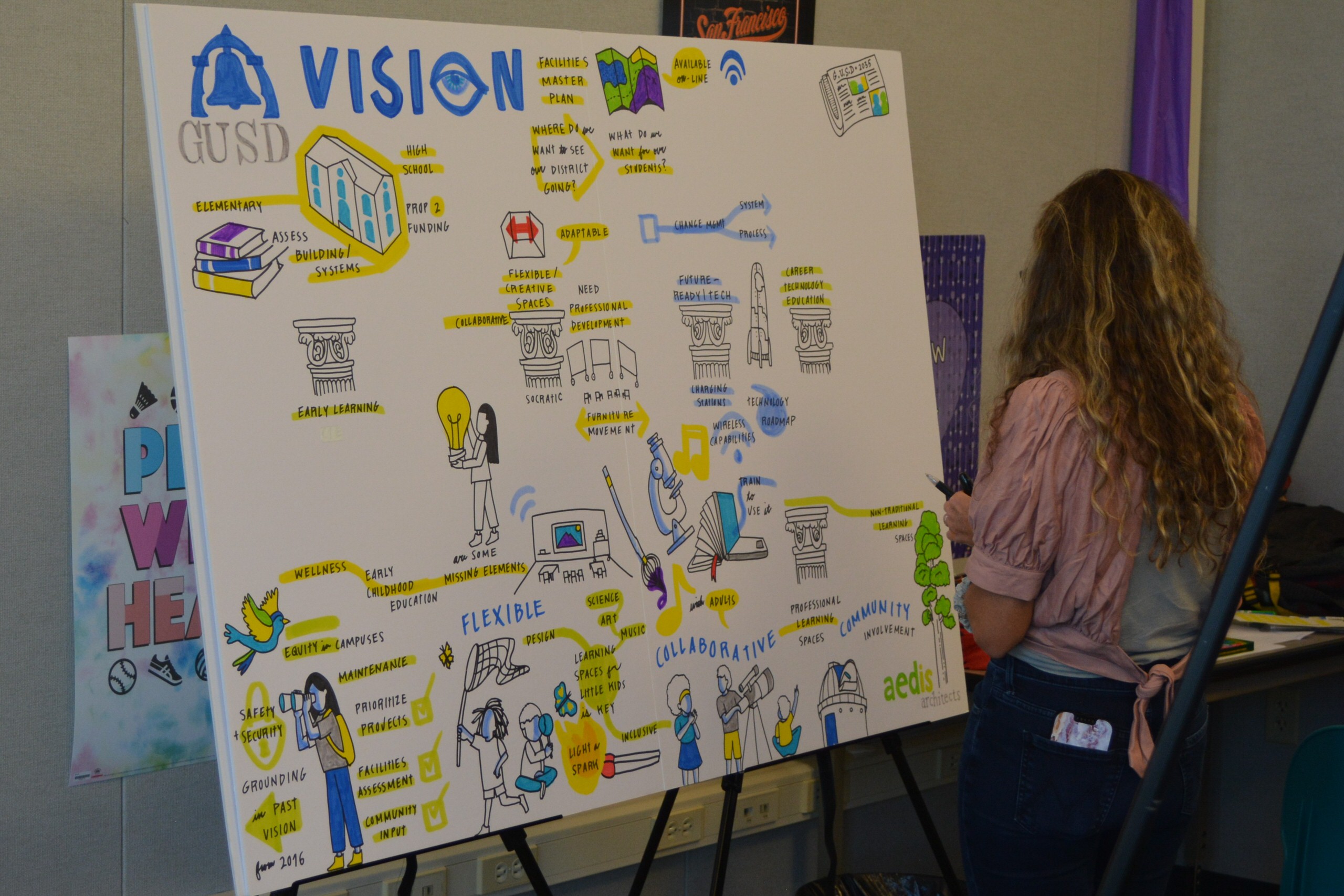
Input from the workshop was organized into key topic areas and synthesized into emerging vision themes. Ideas were documented in real time and translated into a graphic Vision Wall that captured shared priorities and values expressed by District leadership.
Through this engagement, five core pillars emerged to guide the development of the Facilities Master Plan and to ensure that future investments support student success, staff development, community needs, and long-term sustainability:
- Emphasizing the importance of early learning environments.
- Incorporating flexible and creative spaces that support a variety of learning styles, instructional approaches, and evolving educational needs.
- Creating future-ready facilities that enable technology integration.
- Providing facilities that support Career Technical Education (CTE) programs.
- Expanding non-traditional learning spaces—such as outdoor classrooms, maker spaces, and informal collaboration areas—to enhance experiential, project-based, and student-centered learning.
These pillars served as a foundation for decision-making throughout the Facilities Master Plan process and helped align future capital improvements with the District’s long-term vision.